
A Country Searching for Support
In Lebanese Arabic, the word “Sandé” means support.
Not corporate support. Human support. The kind people lean on emotionally, financially, socially, or mentally when life becomes too heavy to carry alone.
And in 2026, Lebanon was a country desperately looking for one.
Years of economic collapse, inflation, political instability, and war had reshaped the emotional state of an entire generation. Public frustration had become part of everyday conversation. So had the language surrounding survival, resilience, and dependency.
At that exact moment, a Lebanese FMCG brand named Sandé approached WonderEight with a straightforward assignment:
launch a tactical outdoor campaign communicating that Sandé is tasty, satisfying, and affordable.
But Sandé faced a deeper challenge than product communication.
Despite operating in a highly competitive convenience-snack category, the brand still had relatively low awareness and limited memorability among Lebanese consumers. Competing louder through traditional food advertising was unlikely to change that.
The objective therefore became larger than launching a product.
We needed to make the name itself unforgettable.
And suddenly, the campaign stopped being about sandwiches.
Food advertising usually fights for attention by showing more:
more ingredients, more appetite appeal, more offers, more noise.
We chose to remove everything.
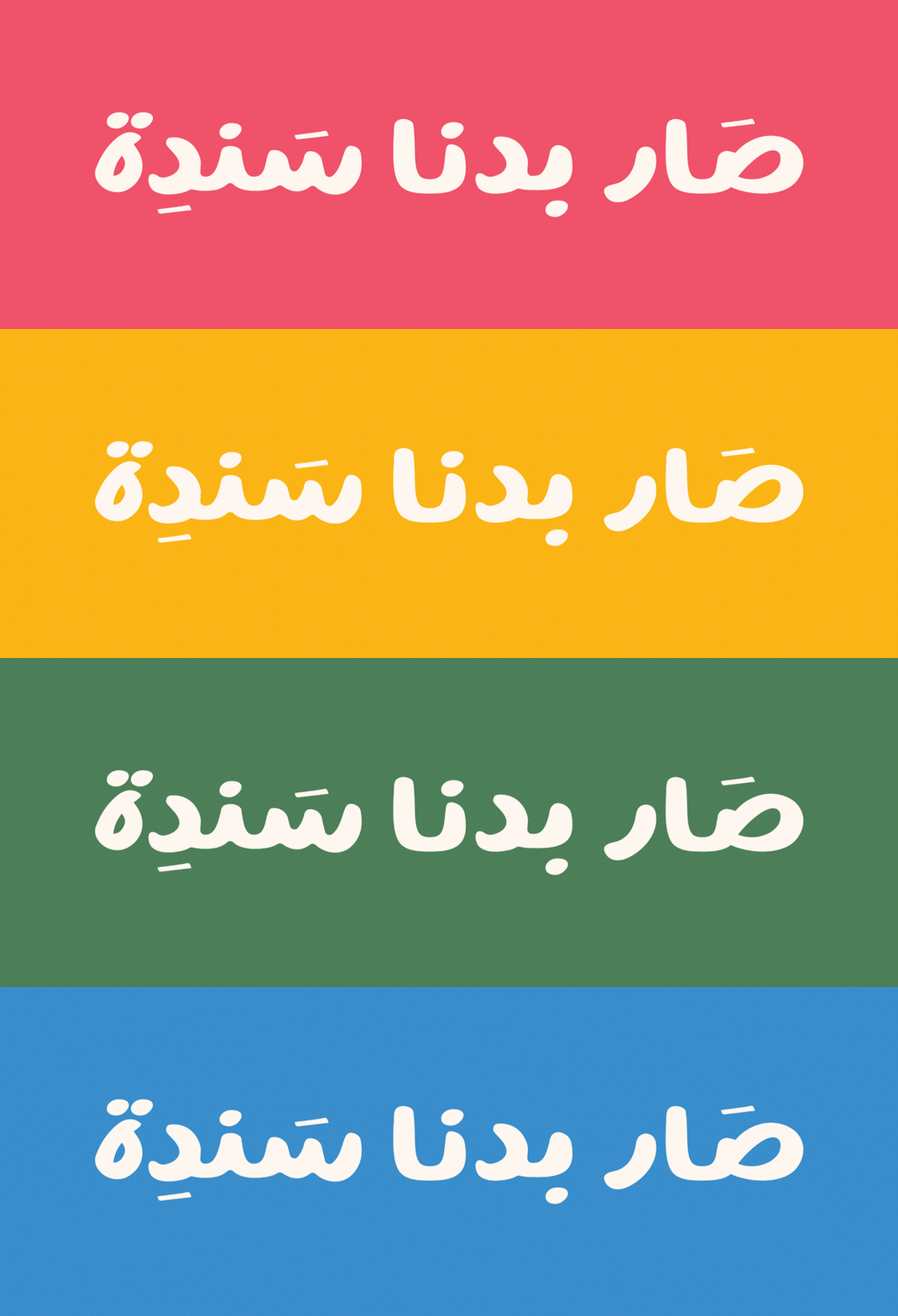
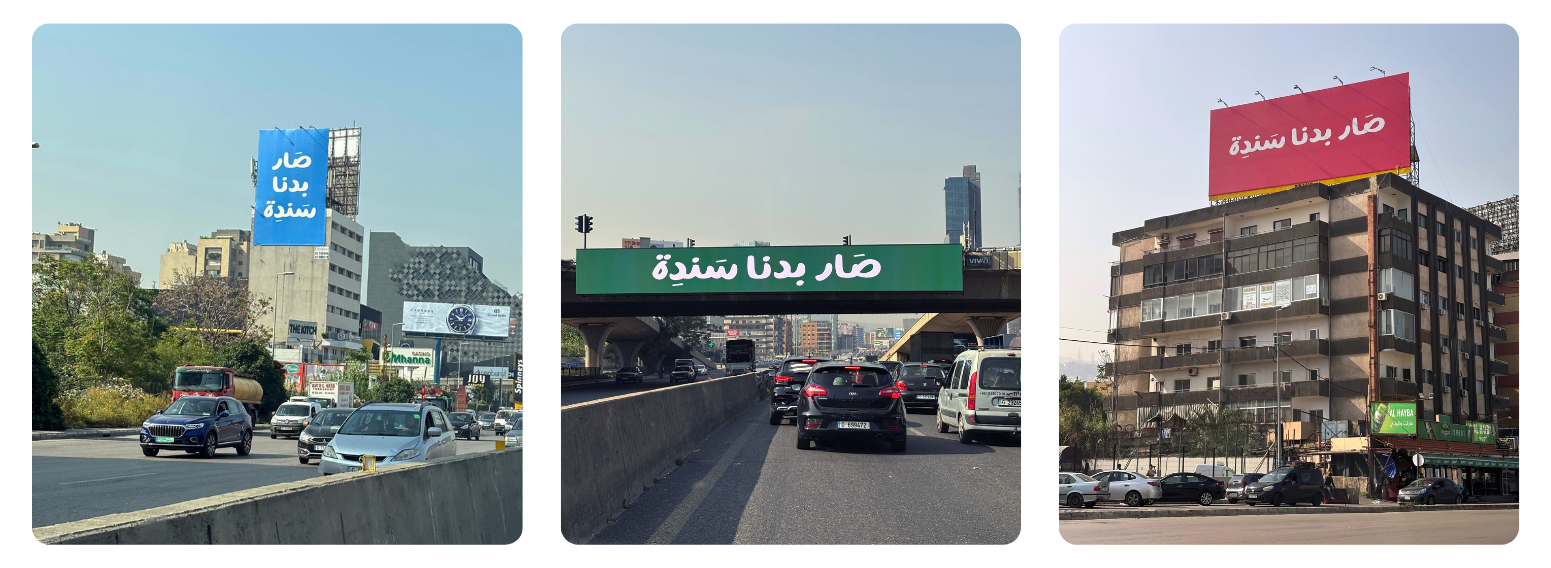
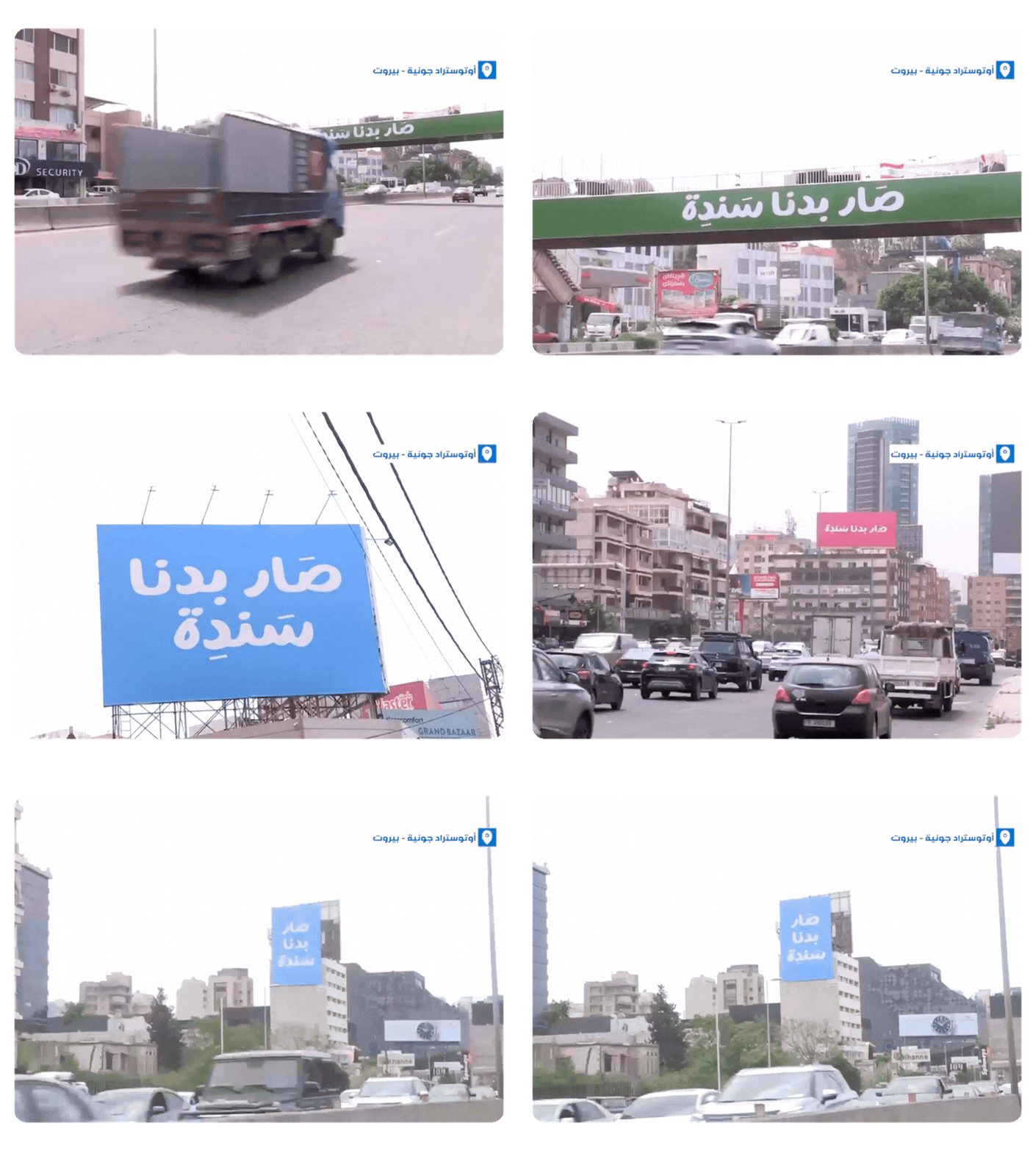
Across Lebanon, oversized billboards appeared carrying one cryptic sentence:
“صار بدنا سندة”
No logo.
No product shot.
No explanation.
No branding cues whatsoever.
Just a phrase emotionally loaded enough to feel instantly familiar to millions of Lebanese people.
The ambiguity was intentional.
Was it political?
A social movement?
An NGO campaign?
A protest message?
A bank?
An election slogan?
Nobody knew.
And because nobody knew, everybody talked.
Within hours, the teaser escaped the billboard space and entered public discourse.
What started as a modest OOH rollout quickly evolved into a nationwide guessing game.
People photographed the billboards from highways and intersections. WhatsApp groups circulated theories. Instagram stories exploded with speculation. LinkedIn marketers publicly debated the campaign strategy in real time. Some praised its boldness. Others criticized its ambiguity before the reveal.
Ironically, both reactions amplified the campaign further.
The teaser became impossible to ignore because audiences were no longer consuming it passively. They were actively trying to solve it.
Soon, major Lebanese brands began hijacking the campaign themselves, inserting their own products, punchlines, and identities into the “صار بدنا سندة” format.
At that point, the campaign no longer belonged entirely to Sandé.
It belonged to the internet.
And the internet kept feeding it.
The campaign’s virality becomes even more remarkable when considering its constraints.
There was:
no major production budget,
no large-scale media rollout,
no paid digital amplification,
and no traditional influencer-heavy launch ecosystem.
The challenge was deceptively simple:
How do you transform a limited outdoor media placement into something people voluntarily distribute themselves?
The answer came from understanding one critical truth about Lebanon:
In a country emotionally exhausted by crisis, culturally loaded language travels faster than advertising.
By tapping into a word already embedded in collective emotion, the campaign didn’t interrupt culture. It entered culture naturally.
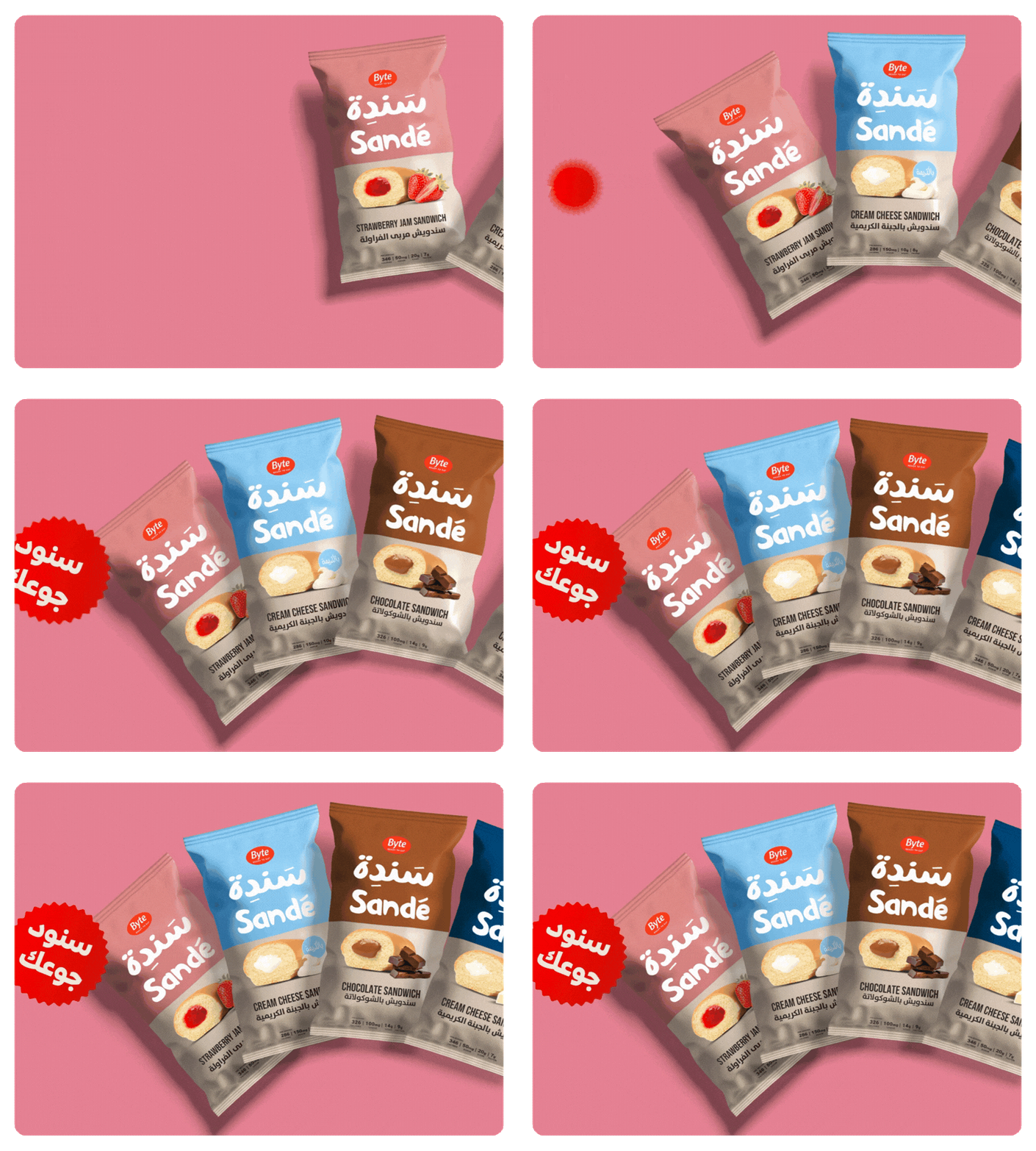
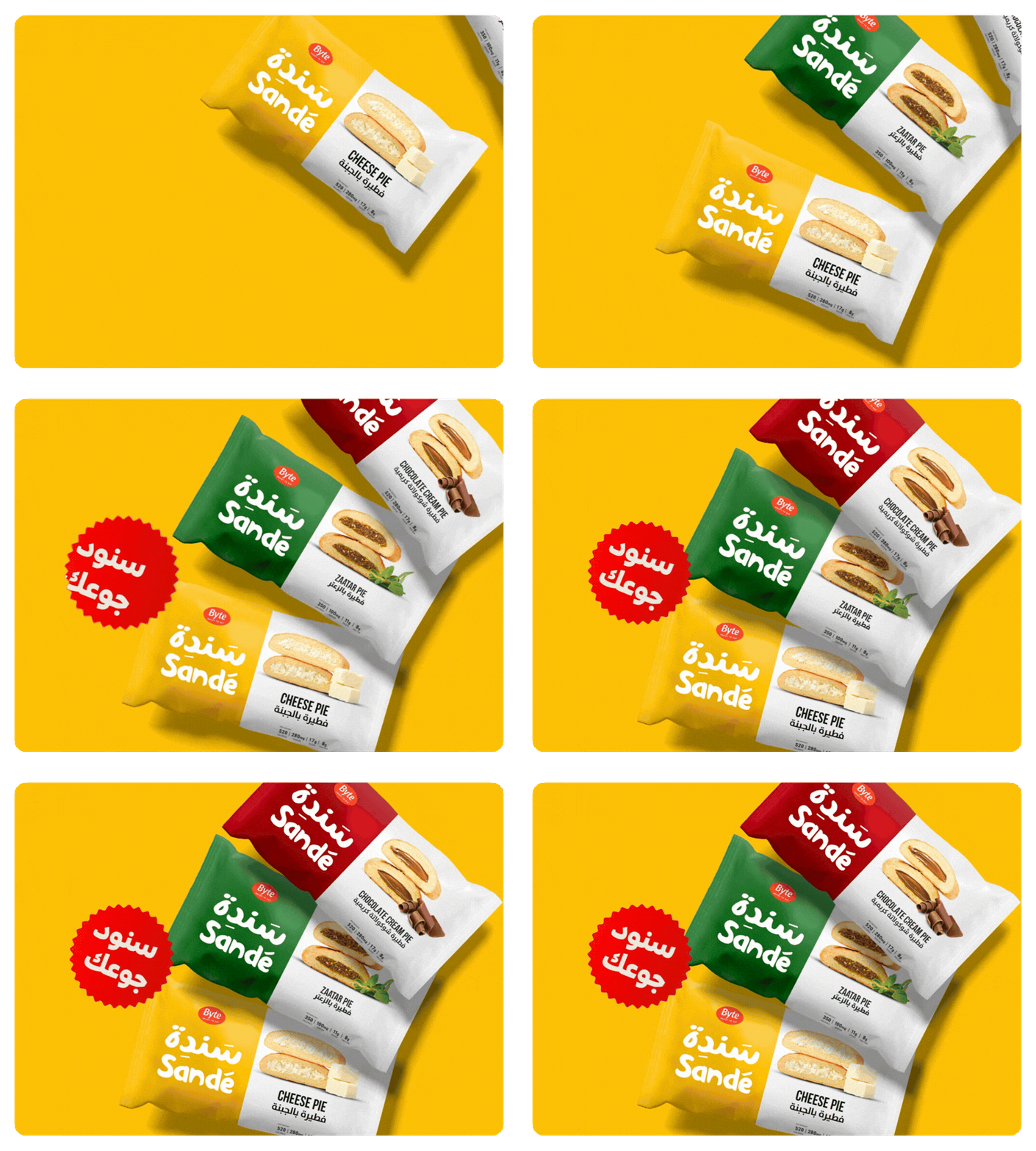
As speculation intensified, the campaign evolved alongside the audience conversation.
Instead of clarifying the mystery, Sandé began playing with it.
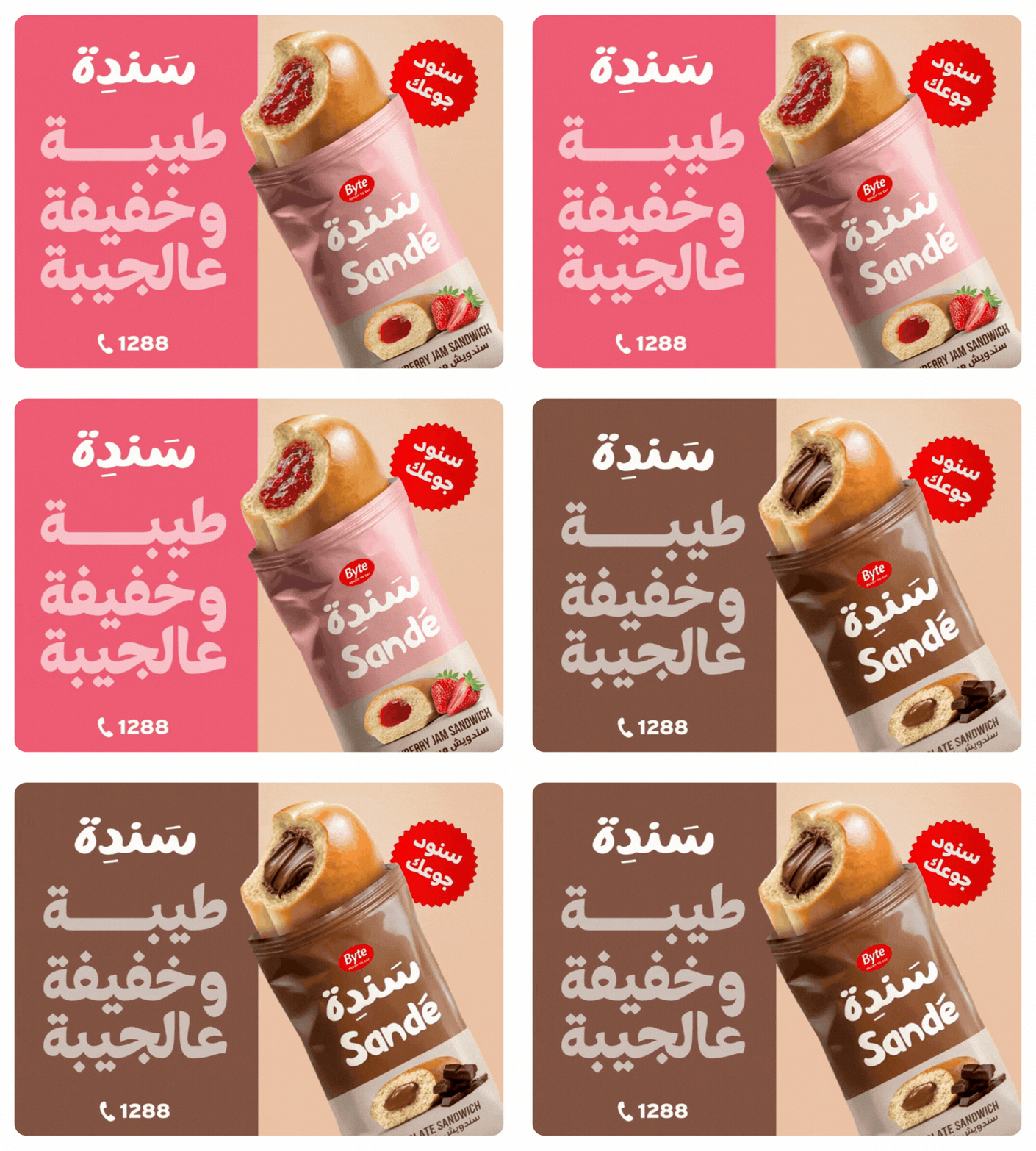
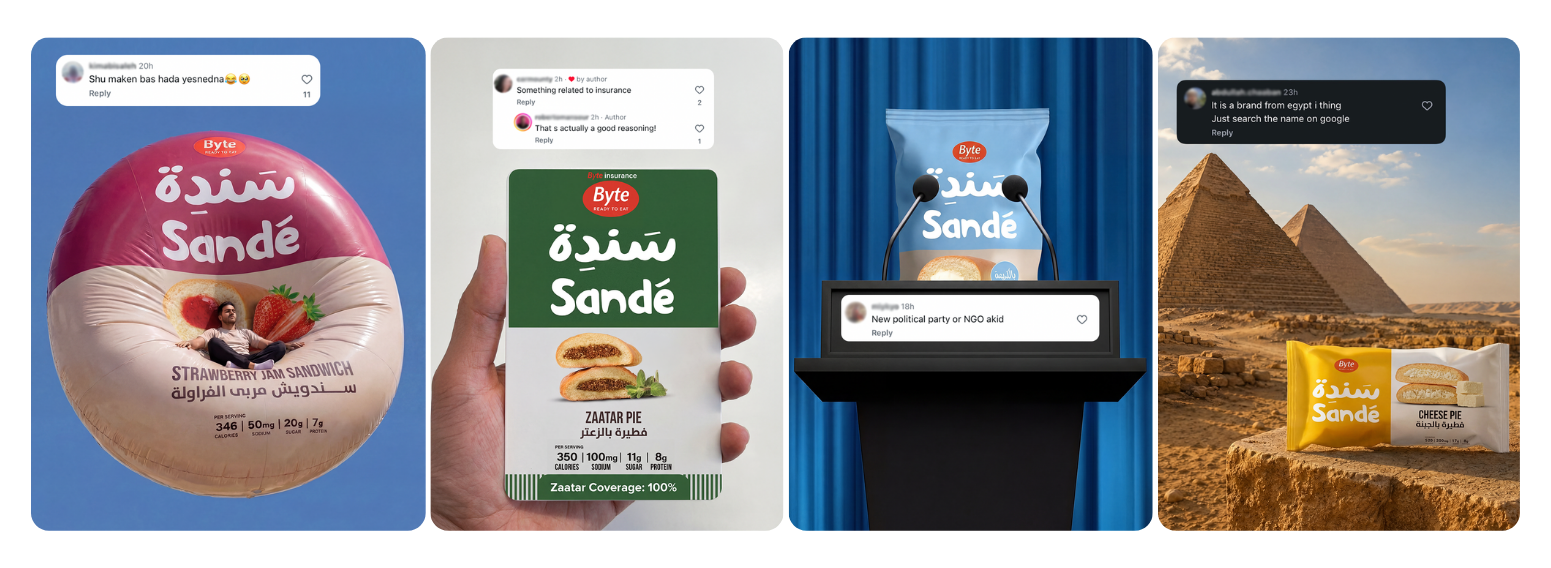
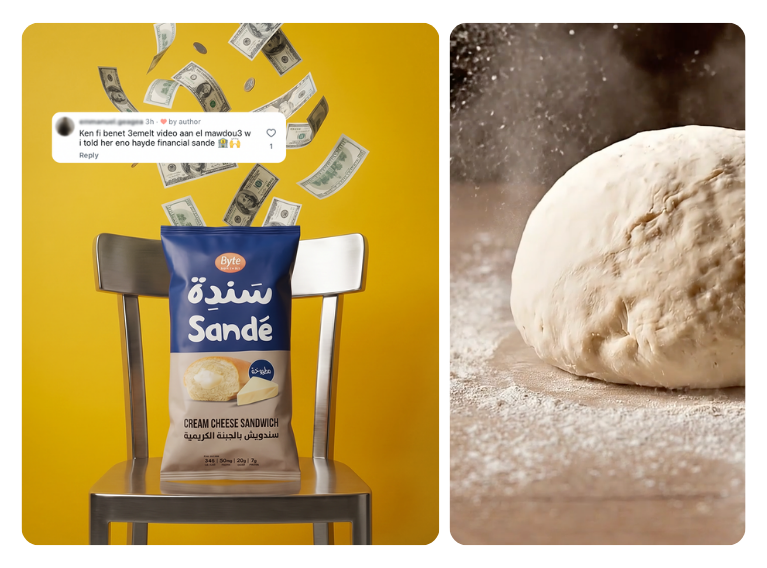
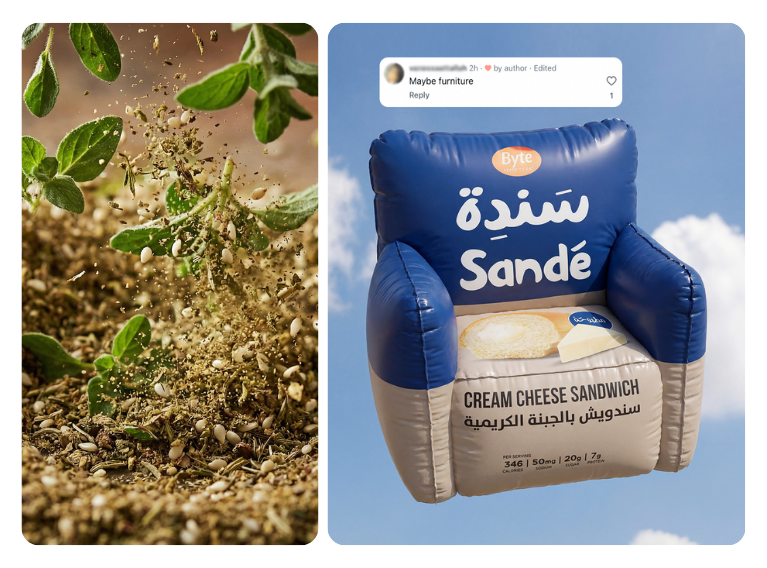
WonderEight released a series of AI-generated social visuals inspired directly by the public’s wildest theories:
financial “Sandé”
political “Sandé”
insurance “Sandé”
furniture “Sandé”
even Egyptian “Sandé” interpretations
The internet’s guesses became the campaign itself.
Each execution rewarded audience participation while extending the lifespan of the mystery organically across Instagram, TikTok, LinkedIn, and WhatsApp.
Rather than controlling the narrative, the brand became fluent in public speculation.
That distinction mattered.
Because people no longer felt advertised to.
They felt involved.
Instead of using creators to announce the product, WonderEight used them to deepen the uncertainty.
Some of Lebanon’s most recognizable marketing voices, including Vahnah Agopian, Wassim Hassoun, and Roberto Mansour, began discussing the teaser publicly with their audiences, participating in the speculation rather than resolving it.
The result was an unusual dynamic:
influencers were no longer broadcasting answers.
They were amplifying curiosity.
Eventually, the momentum became large enough to cross into mainstream media.
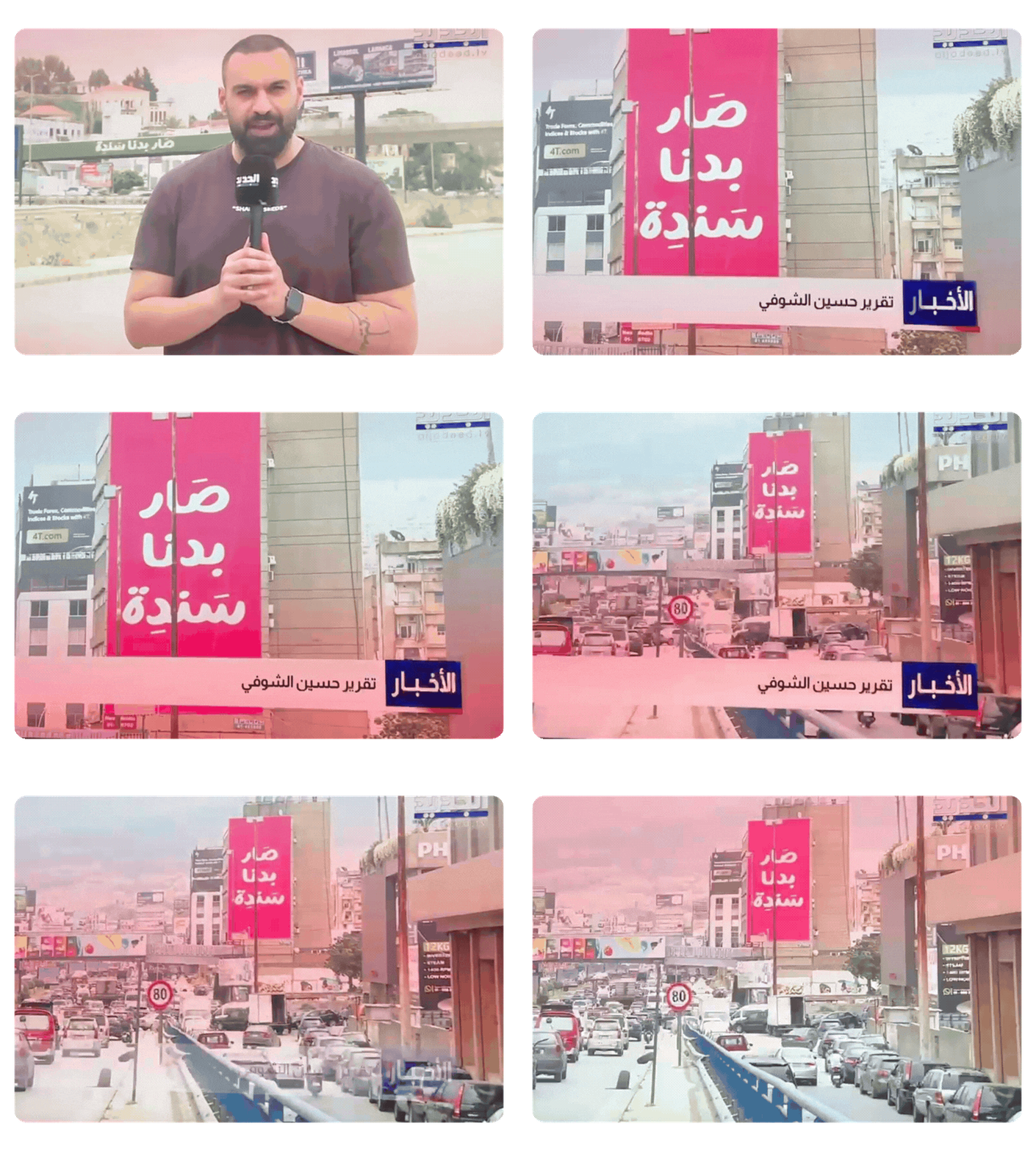
Two of Lebanon’s biggest television networks, LBC and Al Jadeed, picked up the story and debated the teaser live during prime-time evening news broadcasts.
A low-budget sandwich campaign had become a national talking point.
Not through paid reach.
Through cultural relevance.
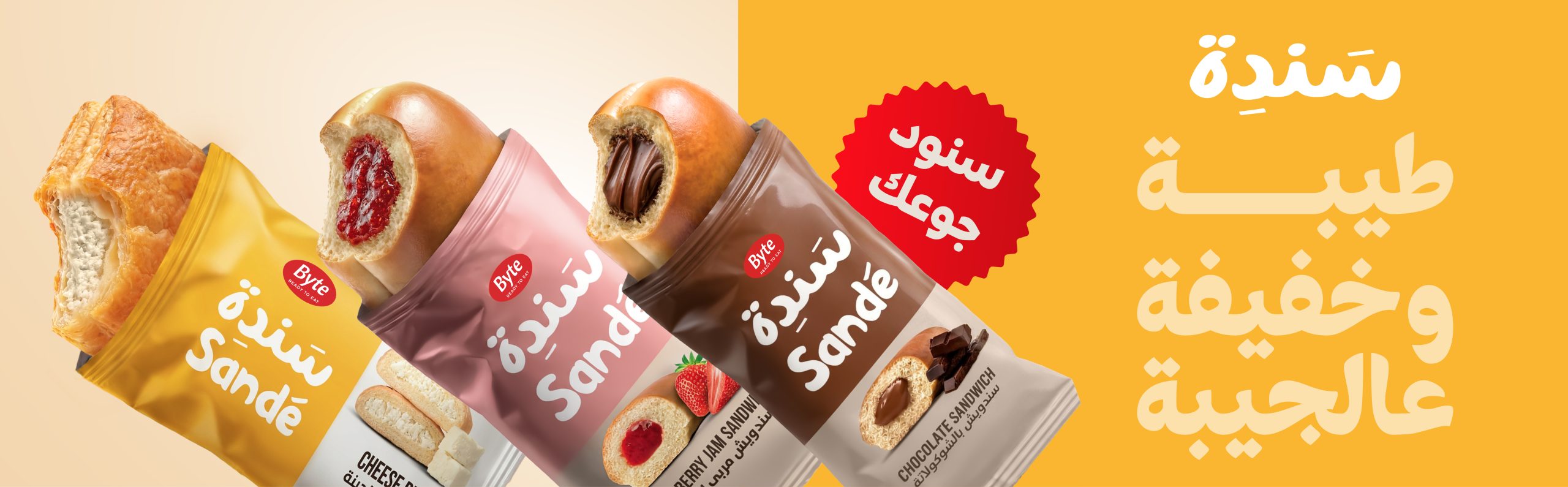
After ten days of speculation, the campaign finally revealed itself.
Sandé was not a political movement.
Not an NGO.
Not a bank.
Not a revolution.
It was an affordable Lebanese snack brand.
And somehow, that made the campaign even more memorable.
Because the reveal didn’t erase the emotional meaning audiences had projected onto the teaser.
It redirected it.
The line:
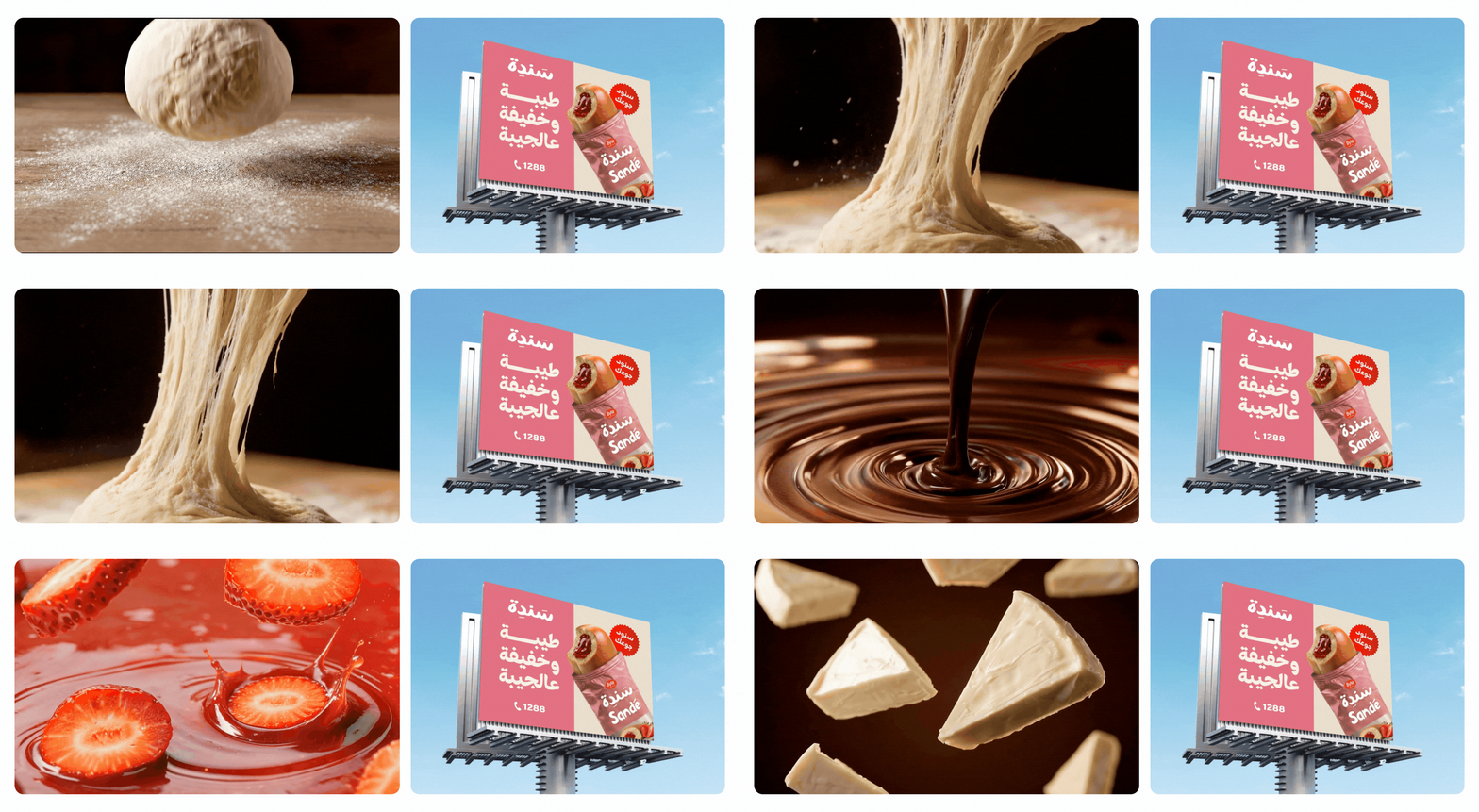
“طيبة وخفيفة عالجيبة”
suddenly landed differently.
The product promise now carried emotional context:
comfort, accessibility, familiarity, and affordability during difficult times.
To sustain the momentum beyond the reveal, WonderEight launched Sandé’s digital ecosystem across Instagram and TikTok while activating a large network of micro and nano creators across Lebanon.
The approach deliberately rejected polished influencer behavior.
No PR-box aesthetics.
No scripted endorsements.
No “the brand sent me this.”
Every piece of content was designed to feel naturally discovered, as though consumers themselves were uncovering Sandé in real time.
Because authenticity was not an execution detail.
It was the strategy.
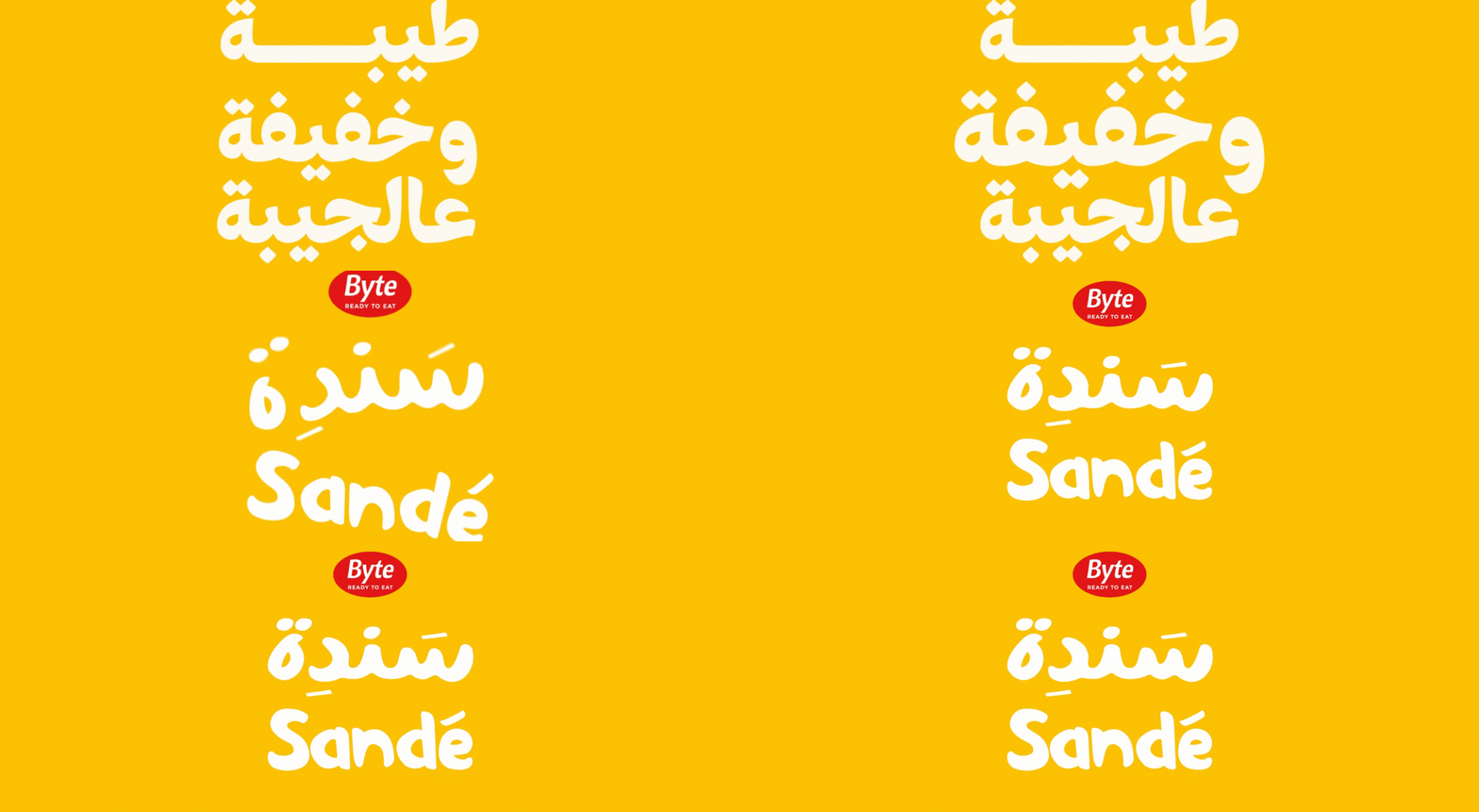
Before the campaign, Sandé was a relatively low-awareness snack brand competing in an overcrowded FMCG landscape.
After the campaign, its name became impossible to ignore.
For days, millions of Lebanese people repeated the word “Sandé” across conversations, social feeds, television broadcasts, memes, WhatsApp groups, LinkedIn debates, and everyday speculation.
People who had never seen the product before were suddenly talking about the brand by name.
Not because they were targeted by advertising.
Because they became emotionally invested in solving it.
The campaign transformed “Sandé” from a product label into a cultural trigger, one audiences continuously repeated, shared, debated, remixed, and remembered.
And in a category where memorability is usually bought through media weight, Sandé achieved it through cultural participation instead.
What began as a low-budget tactical launch became:
• a nationwide guessing game,
• a mainstream media story,
• a social media phenomenon,
• a creator-led conversation,
• a brand participation trend,
• and one of Lebanon’s most talked-about teaser campaigns of the year.
Most importantly, it embedded the Sandé name into public consciousness long before consumers ever tasted the product.
Because before Sandé became a snack brand, it became a conversation the entire country was already having.
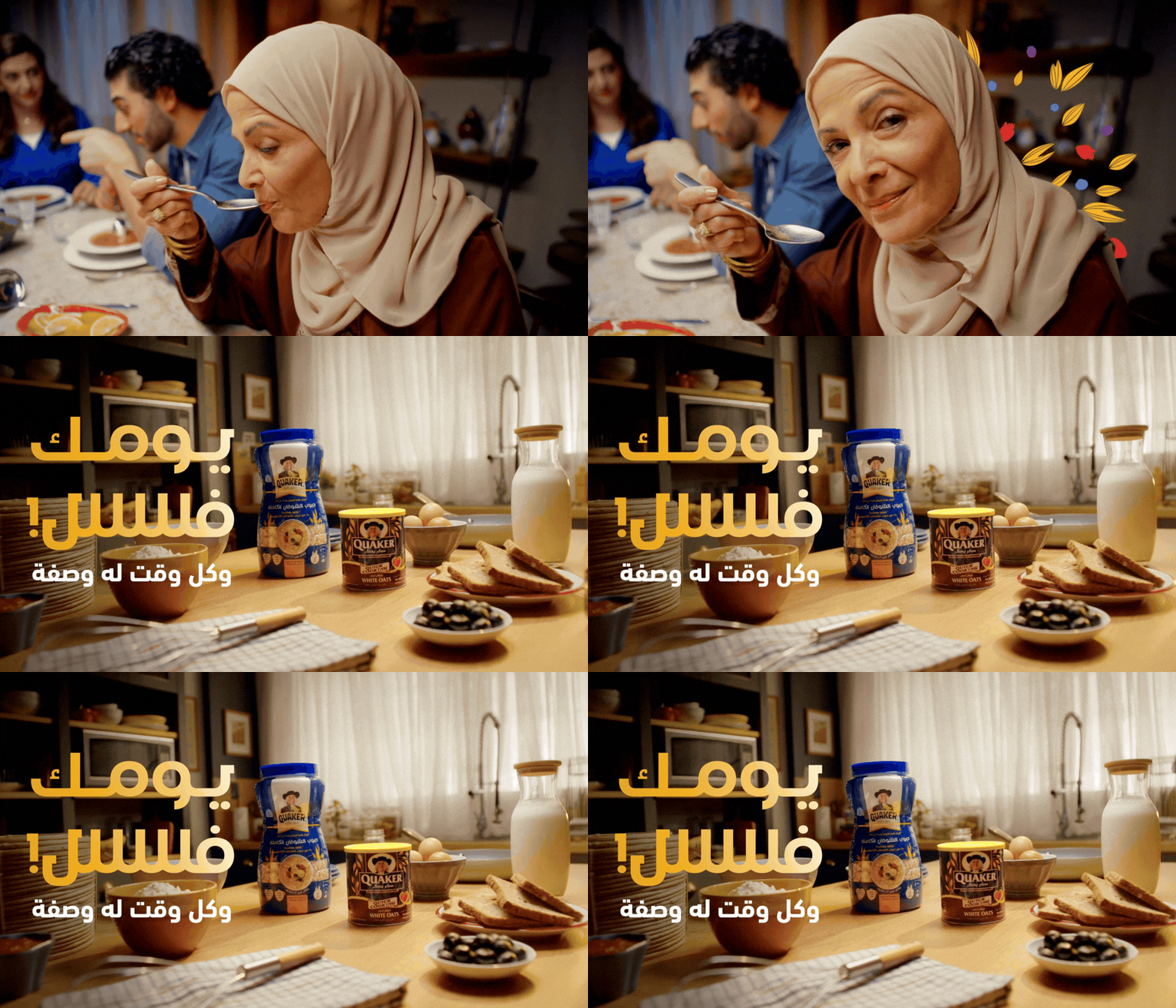
Quaker – From Breakfast Staple to Saudi Lifestyle Lovemark
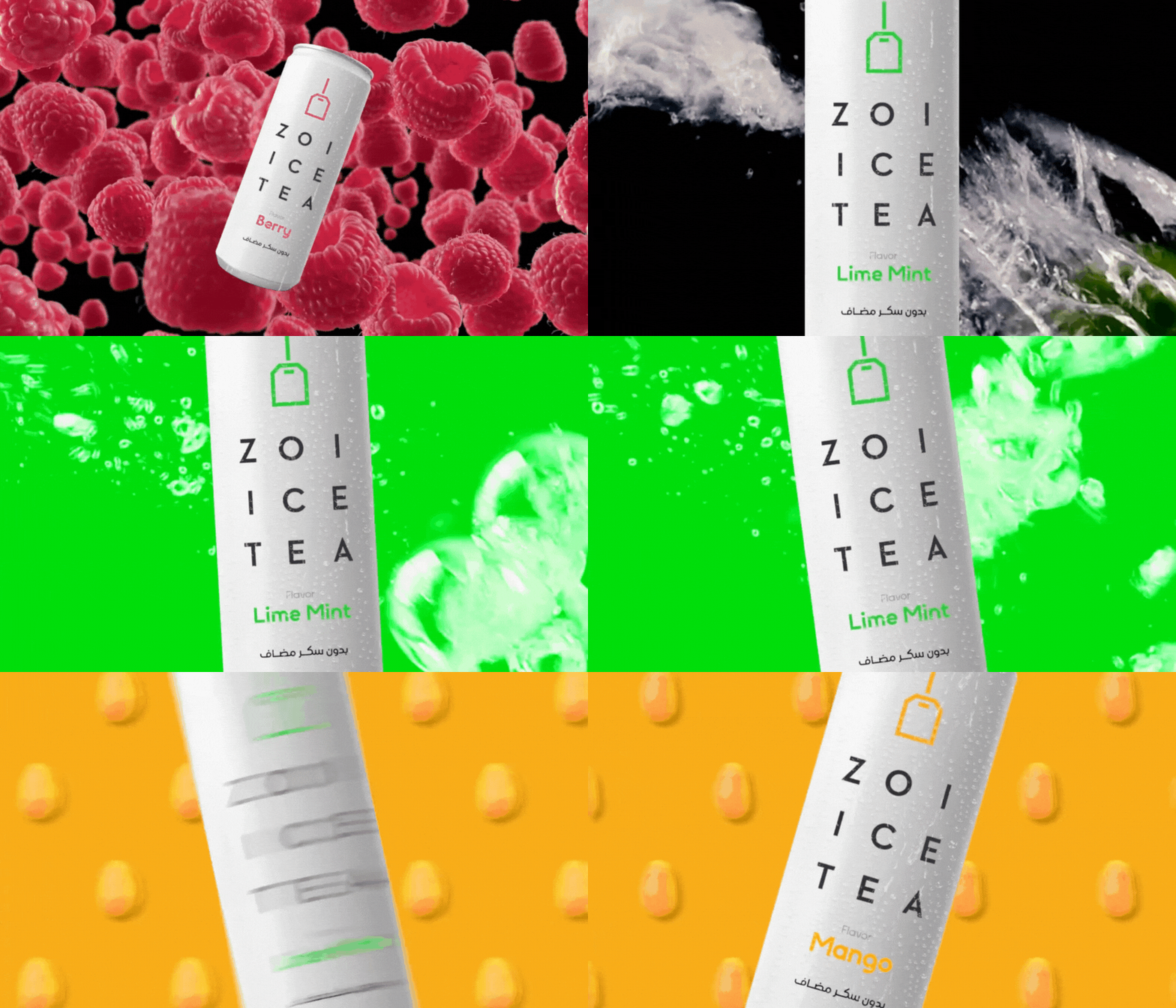
ZOI Ice Tea – Refreshing a Brand for a Bold Market Entry in KSA
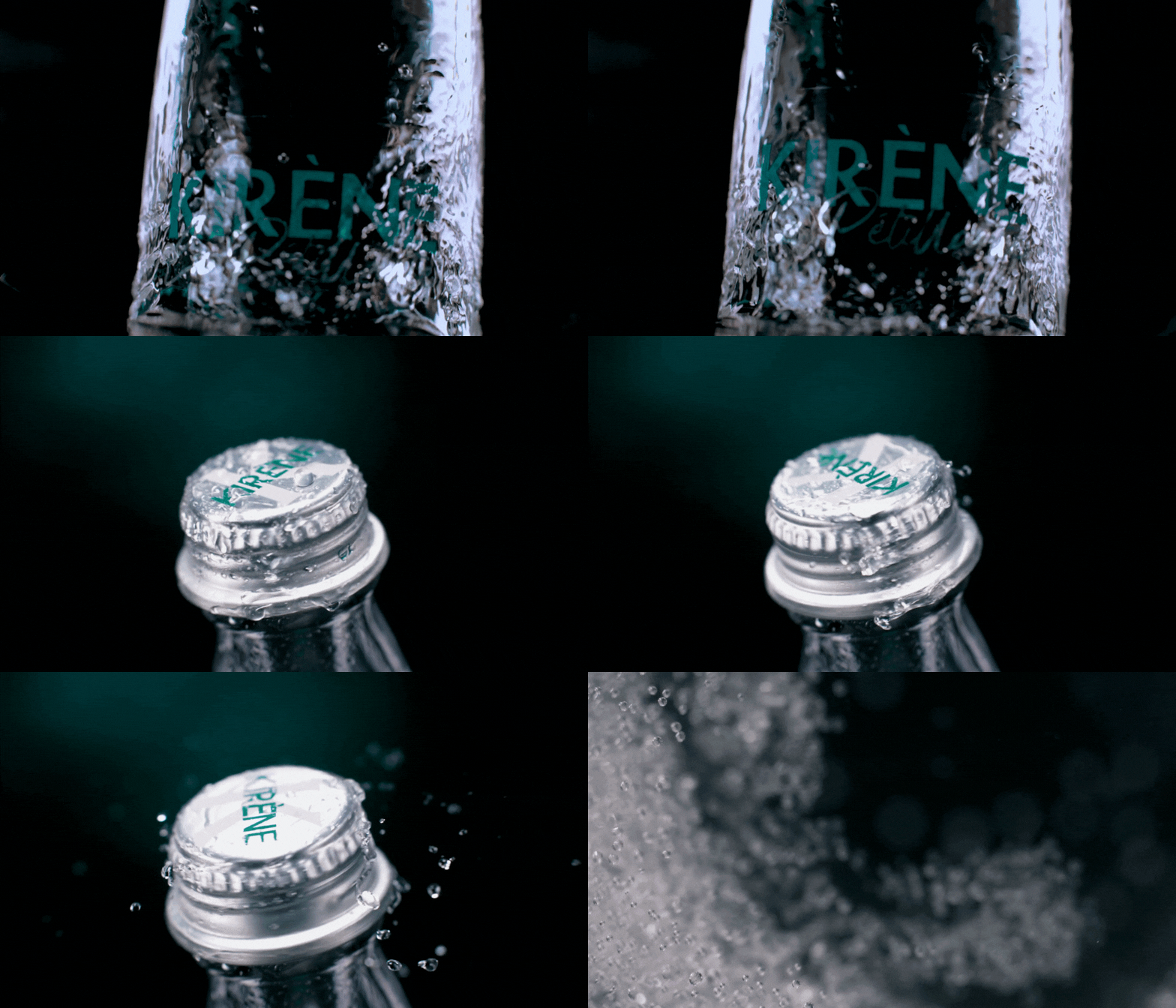
KIRÈNE – Integrated Launch Campaign for a Premium Glass Bottle Line in Ivory Coast
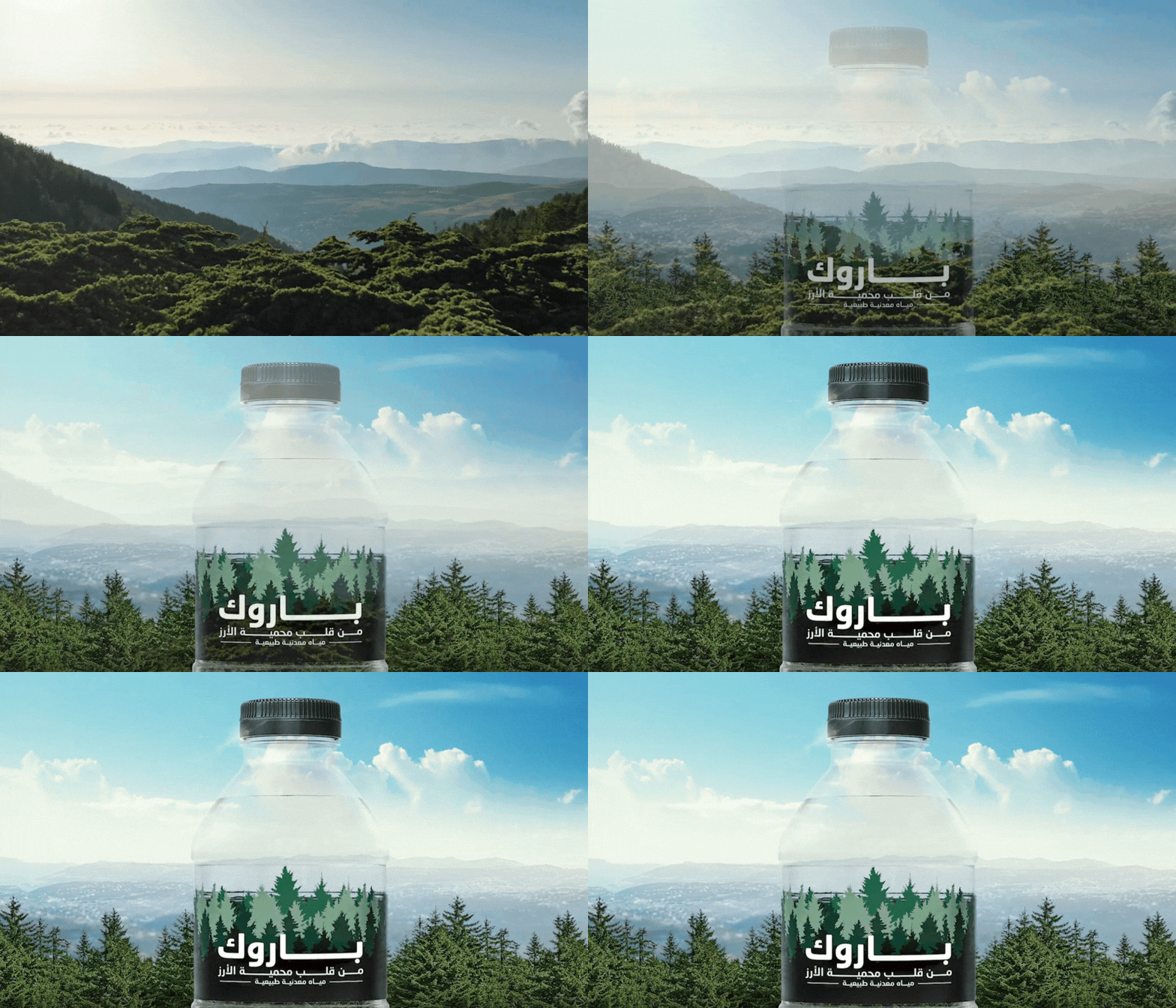
Barouk Water – Brand Creation for Lebanon’s Premium Sustainable Mineral Water